
Political tensions and ideological divisions in Lebanon have risen dramatically in recent weeks, as sectarian violence and spillover from Syria’s deadly civil war plunge Israel’s northern neighbor into the region’s Sunni-Shia war.
 Lebanon serves as a home base for Hezbollah, the world’s strongest Shia Islam terror organization. Hezbollah—an Iranian-backed group—has inserted thousands of militants into Syria in recent months to bolster President Bashar Assad’s regime in its fight against Sunni opposition groups. Meanwhile, Syrian rebel forces and al-Qaeda militants, which are fighting against the Hezbollah-Assad-Iranian axis, have pledged to retaliate by striking Hezbollah strongholds in Lebanon.
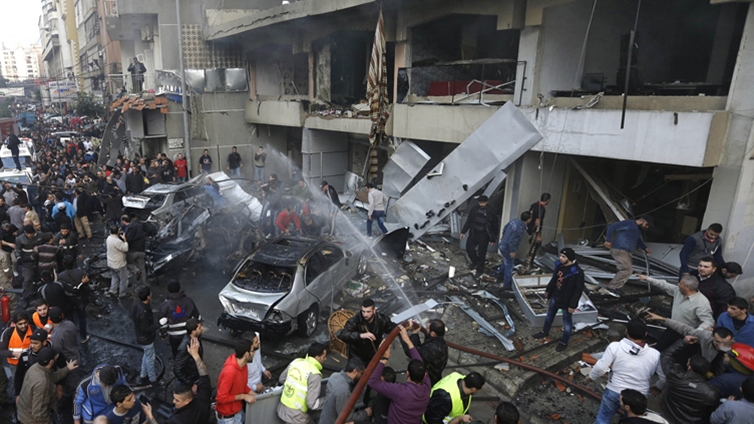
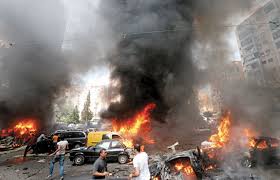
As tensions continue to build, Beirut and its surrounding suburbs have become targets of numerous tit-for-tat car bombings, leaving dozens dead and hundreds injured. “We are seeing the greatest proxy war of modern times playing itself out in Lebanon and Syria and Iraq that have now become really one battlefield in which two great ideological camps are fighting to the death like gladiators,” said Rami Kouri, a Middle East analyst based in Beirut. The latest incident in a wave of recent attacks came on Jan. 2, when at least five people were killed and 77 injured in a deadly explosion that ripped through the southern Beirut suburbs.
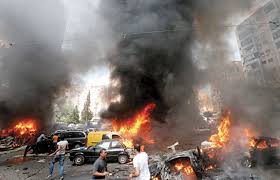
According to reports, a massive car bomb detonated near multiple buildings frequented by the Lebanese terror group and Iranian proxy Hezbollah, with rumors spreading that the bloodshed was the work of a Sunni jihadist group affiliated with al-Qaeda. This attack came less than a week after a similar car explosion in the Lebanese capital killed six people, including senior Sunni politician Mohamad Chatah. The former Lebanese finance minister and ambassador to the United States had been a staunch critic of Hezbollah and its support for Syrian President Bashar Assad, whom he accused of interfering with Lebanese affairs. One week before his death, Chatah penned an open letter to Iranian President Hassan Rouhani raising the “undisputed fact that Iran’s Revolutionary Guard continues to maintain a strategic military relationship with Hezbollah,” and that the Iranian-backed terror group’s involvement in Syria “has greatly aggravated Lebanon’s already precarious situation.” Chatah was killed before he could gather signatures from members of the Lebanese parliament. With the conflict spreading throughout the country, officials fear Lebanon’s already ineffective government could face total collapse as it becomes engulfed in the broader regional struggle.
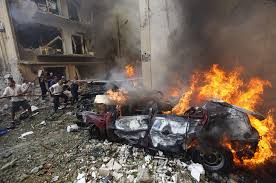 Lebanese officials issued public statements following the Jan. 2 attack, warning of continued sectarian strife and instability.
“We are faced with a huge crisis that is hitting the security of people and their lives,” said Health Minister Ali Hassan Khalil. “This is a great battle against terrorism that is not excluding anyone. This terrorism is targeting all the cities, all the people in order to make sectarian disorder among the Lebanese people.”
Former Prime Minister Saad Hariri, to whom Mohamad Chatah was an advisor, condemned the attack as a “diabolical act,” while former Prime Minister Najib Mikati chastised Hezbollah terrorists for “planning a despicable conspiracy to drown the Lebanese in sectarian strife.”
Lebanese Army Mobilizing against Syrian Forces
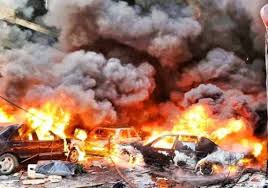 For the first time since the outbreak of Syria’s civil war, the Lebanese army has begun carrying out military strikes on Syrian targets. On Dec. 30, the military used its air defense systems to strike Syrian helicopters after they violated Lebanese air space and raided targets within the country.
Defense Minister Fayez Ghosn said the Lebanese army was acting on the government’s decision to retaliate.
Saudi Arabia Grants $3 Billion to Lebanese Military
 Lebanon’s anti-aircraft fire came one day after President Michel Suleiman announced that Saudi Arabia had pledged $3 billion for the country’s depleted military to purchase arms from France. The Saudi grant is the largest ever given to support the Lebanese military. The military initiatives suggest Lebanon has embarked on a campaign to enforce greater security along its borders, with the hopes of impeding the conflict’s spillover into the country. In a press conference held at the French embassy in Riyadh, French President Francois Hollandereiterated his commitment to “support the Syrian [rebel] coalition” against Assad and his allies, adding that France and Lebanon “share a pledge to work for peace,
security and stability in the Middle East.”
Lebanon has lacked political stability since April 2013, when political gridlock and sectarian clashes prompted Prime Minister Mikati’s resignation.
 le mot de la fin.
 domhertz.com