

IDF barely ready for 2014
Analysis: ‘Jihadist tsunami’ on Israel’s borders, Hamas’ underground system, renewed threat to strike Iran and possible violent conflict this summer are just some of challenges facing Israeli army in coming year.
The second half of next year, it seems, will be a challenging period. We’ll have to deal with the consequences of political-diplomatic processes which will reach maturity towards June 2014. Unfortunately, it’s reasonable to assume that most will end in failure or in an unstable compromise hiding the seeds of the next conflict. The global framework for the Middle Eastern processes will not be much different. The Barack Obama administration, despite criticism, will continue running a compromising foreign policy zigzagging between a desire to implement supreme principles and utilitarian pragmatism. The result: A significant erosion in the United States’ status as a leading and influential power in the international and Middle Eastern arena. The negotiators will of course market the unsatisfactory results as « a small step forward, » as a stage in a long road, but the implications are clear – the second half of 2014 will be an explosive period filled with dilemmas. The forecast: A quiet winter, a tense spring and a summer which could be stormy. Russia will continue its neo-imperial policy, taking advantage of the conflicts and tensions as it is doing in Syria now.Vladimir Putin will gain prestige and make a profit from weapon sales but won’t even get close to the status the US still enjoys in the region. The European Union will continue focusing its efforts on getting out of the economic crisis hitting its countries, but at the same time will not let go of its active involvement in the affairs of the Middle East and Africa. China’s activity here will be based almost only on its economic interests, while in Asia it will act aggressively out of clear nationalistic motives – which are already raising heavy concerns among its neighbors. Especially in Japan, which has launched an accelerated armament process.

Putin, Assad, Rohani and Obama
The Middle Eastern processes will take place within this framework: US-brokered Israeli-Palestinian negotiations on a peace agreement; negotiations between Iran and world powers over dismantling or « turning back » the military nuclear program in exchange for lifting the sanctions; disarming Syria of its chemical weapons and destroying them; an international conference in Geneva in the presence of the fighting parties, aiming to put an end to the bloodshed in Syria; the rise in power of the al-Qaeda-inspired jihadist Islam at the expense of the political Islam like the Muslim Brotherhood; the new Egyptian regime’s effort to move to normalcy and a democratic civilian regime including the approval of a constitution, parliament elections and presidential elections; as well as the internal battles in Turkey between the supporters of Recep Tayyip Erdogan and his opponents, which will reach their peak in the municipal elections this spring.
Potential for violent conflict
The dilemmas which will challenge all of us this year are led by two diplomatic issues which also have the potential of turning into a violent conflict in the summer: The Palestinian issue and the Iranian nuclear issue.
The current effort to reach an Israeli-Palestinian agreement is quickly approaching a crossroad which will require decision making. Israel is facing three options which each carry a painful price:
- An agreement on a permanent settlement which will be carried out in stages based on the 1967 borders with land exchanges (including dividing Jerusalem). This will force Netanyahu not only to make painful, emotional territorial concessions, but also to dissolve and rebuild his coalition.
- Netanyahu will approve the framework agreement – « the guidelines for continuing the negotiations » – which Kerry will present as early as this week in Jerusalem and Ramallah. If Abbas approves it too, the negotiations will continue beyond April.
- The sides will reject the framework agreement presented by Kerry, which will lead to the failure of the negotiations in the spring. Such an event will most likely lead to Israel’s isolation, an international recognition of a Palestinian state within the 1967 borders, a growing flow of boycotts and international sanctions, and a violent unrest in the territories. It’s safe to assume already that Netanyahu and the cabinet will choose the second option.

Arak reactor which may produce plutonium for a bomb
The second dilemma has to do with Iran. It’s already clear to Western intelligence communities that Tehran, despite its smile offensive, has not given up on its intention to become a nuclear threshold country which can produce a reliable nuclear explosive device within several weeks. Moreover, President Rohani and his camp are facing tough opposition to their policy from the Revolutionary Guards and the conservative Ayatollahs. This can be seen in the Iranian foot dragging in the current preliminary negotiations on the implementation of the interim agreement signed in Geneva in November.
But the real test will be in June: If a permanent agreement is even signed between the powers and Iran, and if it is – what will be its nature.

It’s reasonable to assume that Israel will not be satisfied and will not receive the minimum it is demanding: Setting Iran’s military nuclear program at least two years back. In such a situation Netanyahu, Ya’alon and Lieberman, and perhaps the other cabinet ministers as well, will face quite a difficult dilemma: Accepting the outcome and a gradual easement of the sanctions as the lesser of two evils, or launching an open political conflict with the world powers and the US president and administration.
The conflict will also require recruiting Israel’s friends in the Congress against their president and may also entail a renewed threat of a military strike on the nuclear facilities. Neither side will benefit from such a conflict, especially not Israel which is risking losing defense aid and public support in the US, and a war, if Netanyahu decides on a military operation. Yes, as far as Israel is concerned the military option exists and can be expected to be put on the table again in June.

IAF jets. Military option to make a comeback?
In the national security area, alongside « old » and known challenges, the security forces will be dealing with some new challenges in the coming year.
1. A jihadist tsunami
The IDF and intelligence community must prepare an intelligence and operational infrastructure and develop fighting methods which will allow them to deal with a « jihadist tsunami » piling up on Israel’s borders, mainly in Syria.
We are talking about fanatic Salafi Sunnis operating as part of al-Qaeda or inspired by al-Qaeda, who are succeeding in laying their hands on huge amounts of modern weapons from the depositories of the Syrian army which Jabhat al-Nusra and the Islamic fronts have taken control of, and on Libyan weapons which keep flowing into the hands of Salafi groups operating in Sinai and Gaza.
The Israeli intelligence community is mainly concerned about Jabhat al-Nusra, which is active in Syria and includes some 10,000 motivated and experienced fighters, including about 1,000 foreigners from Europe and Asia. This is the biggest fighting system directly affiliated with al-Qaeda. If and when its people take over Syria, for example, they will direct their full fanatic passion and the weapons they have accumulated against us, in a way which will make us long for Hezbollah. The Americans, and mainly the Europeans, are also concerned about the al-Qaeda base which has taken its place on their doorstep.

Al-Qaeda fighters’ course in Syria
2. Israel no longer making an impression
A second challenge is dealing with the « terror without an address. » Not only Judea and Samaria, but also in Gaza and the Lebanon and Syria borders, have seen more cases of terror attacks of all types this year, from murder and kidnapping to rocket fire, which no one has taken responsibility for. Worse, the terrorists did not leave an « intelligence signature, » preventing the Shin Bet and IDF from thwarting or punishing after the attack in a way which would deter additional « lone » perpetrators.
With the absence of organizations claiming responsibility or a clear identification, Israel is using a worn-out pattern of operation which is no longer impressing anyone and is inefficient, according to which whoever controls the area the terror attack came out of is responsible for it. According to this worn-out mantra, Hezbollah and the Lebanese government are responsible for any incident of fire from Lebanon, even if it’s clear that whoever launched the Katyusha rockets did it in order to get them into trouble. The same applies to Hamas in Gaza. The IDF’s retaliatory artillery fire or air strikes have no effect and sometimes even act as a boomerang against us and encourage revenge attacks. This situation requires the IDF and intelligence community to engage in creative thinking: How to thwart and mainly how to deter the terrorists without an address, without getting into a wide-scale operation which will lead to a major flare-up.
3. The underground
A third new challenge is what the IDF calls « the underground »: A system which includes attack, fighting and rocket launching tunnels which Hamas has prepared ahead of the next conflict, on the Gaza border and within the Strip. There are signs that Hezbollah is also going underground.
The Southern Command is mainly concerned about the attack tunnels, through which Hamas and the Palestinian Islamic Jihad are planning to smuggle fighters into our territory in order to storm communities and posts near the fence, kidnap and carry out mass killings. Southern Command chief Sami Turgeman is not the only one losing sleep over this threat. So is the entire General Staff, which is working vigorously to find a answer.

Terror tunnel unearthed on Gaza border
4. Winning from the sea
A fourth challenge is building an ability for the Navy to participate in the land fight as an important factor. Until now, the Navy has mainly served as a defender of the coasts and sails to and from Israel. Intensive work is now taking place to allow Navy vessels to hit targets on the ground with masses of accurate fire and help field units with other forms of battle.
5. Where is the money?
The real challenge Chief of Staff Benny Gantz will have to deal with in the fourth year of his term (which begins next month) is preserving the IDF’s preparedness and competence within the limits of the budget he has received.
Reserve units which do not belong to the first attacking ranks of the field command will not be practicing in the coming year; very few reservists will engage in operational activity in the territories and along the borders, and all the burden will fall on the soldiers of the regular brigades’ fighters, who will engage in nine months of operational activity. They will be left with very little time for training and maintaining their fitness. The stock of arms and spare parts will also face erosion. Head of the IDF’s Planning Directorate, Major General Nimrod Shefer, is saying openly that 2014 will be a year of minimum preparedness. The chief of staff has taken quite a significant but calculated risk here in light of the budget cuts forced on him in the middle of the year and in light of the government’s commitment that starting in 2005, the IDF budget will resume its growth. The absurdity is that the government has in fact already canceled the defense budget cut for 2014 because this year’s deficit was smaller than expected. But the army, which has sent home 1,000 career soldiers in the past two months, did not receive an addition of one shekel for training or equipment.
It turns out that most of the money returned to the defense budget disappeared into the salary, pension and rehabilitation (disabled soldiers and bereaved families) clauses; the defense industries received advance payments too. Who has been left with nothing? That’s right, the army and reserve forces. We have already been through all this: Remember the Second Lebanon Warin the summer of 2006? The summer of 2014 is just around the corner.
Secret document presents potential for marked escalation in West Bank terror.
Return of fighters from Syria could lead to al-Qaeda foothold mere miles from Israeli cities. A secret report by one of the Palestinian security services – obtained by Ynet – paints a worrying picture of a possible explosion in terror in the West Bank in the coming year. The report warns that there is a high probability of a third intifada erupting in the territories if the current round of US-backed peace talks is unsuccessful. The report’s authors recommend that the Palestinian civilian authorities and the security services draw up a plan to cope with any escalation in demonstrations, in order to reassure the public that the Palestinian Authority is properly positioned to deal with such events. According to the report, if the current round of negotiations fails, there will be marked rise in « spontaneous attacks » in 2014. The authors believe that Hamas will change its strategy and shift resources away from its civilian programs to covertly resume its militant activity in the West Bank – but only if the hitherto unsuccessful reconciliation efforts between Fatah and Hamas fail once again. The new Hamas strategy is directed from the Gaza Strip, its stronghold, as well as abroad, primarily by prisoners released in the deal to free captured IDF soldier Gilad Shalit. At its heart is a plan for the military arm of the organization to focus on carrying out shooting attacks on Israeli targets, rather than the suicide bombings that characterized much of the second intifada and drew a massive IDF response.

Palestinian protest on anniversary of Second Intifada
The report claims that the first objective of the military wings of Hamas, Islamic Jihad, and the Popular Front for the Liberation of Palestine (PFLP) is to kidnap an Israeli soldier or civilian and hold him hostage in the West Bank, with the hope of exchanging him for Palestinian prisoners.
The document highlights that the current mood in the Palestinian sphere encourages this form of activity, because of the desire for a solution to the prisoner problem, and because of the understanding that this issue will not have a political solution at any point in the near future.

IDF soldiers uncover tunnel from Gaza built to smuggle kidnapped soldiers
The secret assessment also describes the fears of Palestinian security services that terror cells will expand their activities into the Israeli-controlled Area C of the West Bank, as well as the areas near Jerusalem, because the Palestinian security services cannot operate there, and the Israeli military presence is minimal.
Hezbollah in West Bank
The authors of the report expect Hamas to export their technological information and data on the manufacture of rockets from the Gaza Strip to their activists in the West Bank. They believe, however, that Hamas would only use these rockets in the case of an all-out confrontation with Israel or if a vital senior operative is assassinated. The report also warns of increased activity by Salafi jihadist organizations, who are expected to build infrastructure for Salafi cells to operate a terror campaign against Israel from the West Bank. These cells are partially comprised of ultra-radical former Hamas members who have shifted their allegiance to a more extreme camp. These new terror cells receive directions from Salafi operators in the Gaza Strip. The report warns of the potential recruitment of students and young Palestinians studying abroad in countries which have an al-Qaeda presence. It also highlights the danger posed by Palestinians fighters returning from fighting for the rebels in Syria.
Some of the Palestinians who answered the call to jihad in Syriahad sided with Jabhat al-Nusra, a radical branch of al-Qaeda operating against the regime of Syrian President Bashar Assad. The report warns of the possibility that they may set up al-Qaeda terror cells upon their return to the West Bank. The document further warns that in the wake increasing tensions between Iran and Israel, and the deteriorating relationship between Iran and Hezbollah over the civil war in Syria,Hezbollah will attempt to set up sleeper cells in the West Bank and East Jerusalem by recruiting Palestinians living abroad. The authors surmise that these cells would be used to gather information and would be deployed in line with the organization’s strategy on Israel.
The smiling dead: Recruiting rebels for Syria
Global jihad discovers creative way to recruit young adults to its war on Assad – publishing pictures of smiling martyrs
As previously reported, international jihadi organizations have established a foothold in the Syrian civil war, fighting alongside civilians against the regime of Bashar Assad. The organizations have no qualms about using multiple methods to attract more volunteers to the cause. A few days ago, Al Arabiya aired a news story in which it described one significant strategy employed by the extremist organizations – posting pictures of smiling recruits after they were killed in battle. The message is clear: the volunteers were happy to die in the battlefield. The images of the smiling dead are posted to popular social networks like Twitter, Facebook, Flickr, and Instagram for maximum distribution; web users are asked to celebrate the death of the « heroic fighters. »
Web users who are interested in joining the fighting in Syria on the side of jihadi organizations are invited for a job interview through Skype. During the course of the interview they receive expert advice on military tactics and combat. Global Jihad uses the network not only to recruit rebels for the Syrian civil war, but also to collect donations with people who support its agenda – according to the Middle East center for scientific studies, which tracks social media and internet usage. The jihadi organizations’ new recruiting tactic is a marked change from their previous strategy of using training videos and high-profile acts to draw new volunteers. One jihadi organization that stands out from the pack is the Al-Nusra Front, an Al-Qaeda associated group started in January 2012, which has been designated as a terrorist organization by the UN, US, UK, and Australia.
In April 2013, Al-Nusra began closely cooperating with the Islamic State of Iraq and the Levant. The latter is led by Abu Bakr al-Baghdadi who took the mantle of leadership after the previous head of the organization was killed in an American airstrike. Most of his fighters are foreigners who came to Syria to fulfill the practice of Jihad and take part in transforming the secular state into an Islamic stronghold. Hamoud al-Ziadi, an expert on jihadi organizations, said that the Islamic State of Iraq and the Levant negatively affects the Syrian civil war and is considered the most extreme of the organizations involved in the fighting against Assad. « We are talking about a delegation of al-Qaeda, but it is the most vicious face al-Qaeda has, » explained al-Ziadi, and noted that, « This organization is causing a rift in the Syrian opposition when it forces Islamic law on the people and places its controls. The organization recruits many young men from the Gulf countries and Arab states that it can later export… a significant danger for the region as a whole. »
From Gaza to Syria: Allah’s Jihad
Even Gaza has become fertile land for international jihadi organizations to recruit future rebels for Syria. Muhammad al-Zahanin, a 23-year-old from Gaza, arrived in Saudi Arabia to fulfill the hajj, the pilgrimage to Mecca which is one of the five pillars of Islam. Three months later his family was informed that he was killed in a suicide bombing in Syria, apparently in the service of the Islamic State of Iraq and the Levant. Muhammad’s mother told Ynet, « My son left on June 13 without informing us, but called the next day to say he was in Saudi Arabia performing the hajj, and that he would return in 20 days. »
According to her, « After that we lost contact with him for a long time. Then Muhammad called on September 2 and said he was in Syria, performing the commandment of jihad for Allah. On the September 16 he spoke to all of us on the phone, and the next day his friend called to let us know he was killed. »
The Salafi organizations in Gaza published a video clip of Muhammad and another agent that was also killed in Syria. Al-Zahanin appears in the video with a beard, dressed in traditional garb, reading his purported will. « I ask of my god the highest level of martyrdom. » Al-Zahanin was not the only Gazan recruited into the ranks of global jihadi organizations to fight in Syria. Abdullah al-Maqdisi, a senior member in Gaza’s Salafi organizations, estimated that the number of fighters that left the Strip to fight in Syria stands at 27,000. « A portion of the fighters returned, a portion were killed, and another portion was injured and is still receiving treatment in the country, or they may have moved to another country, » said al-Maqdisi.
Leaving the Strip for Syria
What causes young Gazans to leave the Strip for Syria? According to a senior Salafist, « There is a situation of confusion in the Gaza Strip between the ceasefire, the freeze in acts of resistance, and the pursuit of anyone who tried to commit jihadi acts, followed by accusations of treason and attempting to sabotage the lull in hostilities. This matter has caused much frustration among out brothers, and has inspired them to seek other alternatives, like the fighting in Syria. »
Al-Maqdisi added that, « Among those people you have ones like Muhammad al-Zahanin, who was wanted by Hamas‘ security services because he repeatedly launched rockets towards the Zionist entity. » Al-Zahanin’s mother confirmed that, « Her son was arrested more than three times and was called up for investigation on a monthly basis. »
Saudis’ choice: Iran or Israel.
Abdul Aziz Qassim, a Saudi commentator at the al-Watan newspaper, wrote the following in an editorial last week: « The most sensitive question is being asked: Should the Sunni countries welcome an Israeli attack on Shiite Iran, as Iran remains their No. 1 enemy in the region? Yet we must not ignore our years-long hatred for this bad little country (referring to Israel), and our stance regarding the attitude towards Israel is clear: It is the eternal enemy of the region the same way Iran is the region’s biggest danger. »
Only Arabs left without nukes
Saudi commentators and reporters have recently expressed their despair over the Iranian-American agreement reached recently, which allegedly gives Iran legitimacy to enrich uranium. The Saudis have a bad feeling that in the near future the Arab world will find itself between two nuclear countries, Iran and Israel, while the Arabs are left without nuclear capabilities.
Saudi Arabia sees itself as the leader of the Arab world, an island of stability and economic power in the Arab world, which has weakened and is bleeding following the damages of the Arab Spring. It is also considered today the leader of the moderate Sunni world, and supports the secular Sunni forces – the Syrian rebel organization, the Free Syrian Army, and the Egyptian army fighting against the Muslim Brotherhood.
Saudi Arabia is anxiously monitoring the split within the Sunni forces, like the war between al-Qaeda groups in Syria and the Free Syrian Army and the tensions between Turkey and Egypt over Turkish Prime Minister Recep Tayyip Erdogan’s support for the Muslim Brotherhood.

Shared interests, but… King Abdullah and Netanyahu

Riyadh feels abandoned by Washington. John Kerry and Saudi counterpart Saud al-Faisal
Saudi leaders are also losing sleep over the success of the Syrian regime’s army, with the help of Hezbollah, in taking over most of western Syria. Iran’s long arms are evident in Syria and Iraq, where a religious war is taking place between Sunnis and Shiites, and these two countries are on the verge of a split between east and west. In Bahrain too the Iranian regime continues to incite the Shiite majority against the Sunni minority rule. The Saudis are now worried that lifting sanctions on Iran in the future will allow it to reinforce its support for Shiite groups in all of these arenas and deepen the Fitna – the religious war between Sunnis and Shiites.
Are we missing a historical opportunity?
The interests of Israel and Saudi Arabia in the Middle East have never been so close: They are both concerned over Iran’s nuclearization, they both support General Abdel Fattah al-Sisi‘s war against the Islamists in Egypt, they are both interested in seeing Hezbollah fail in Syria, they both have an interest in weakening al-Qaeda and strengthening the moderate Sunni groups in Syria, and they are both disappointed with the United States’ policy and feel it has abandoned them all alone in the region. Saudi Arabia turned to Israel in 2002 through the Arab League proposal for comprehensive peace in the Middle East, in exchange for its return to the 1967 borders. Israel never officially accepted the proposal, although senior politicians like Ehud Olmert and Shimon Peres have expressed a positive attitude towards it.
Recently there have been many reports in the Arab press about secret cooperation between Israel and the Saudi Arabia. But these reports should be read cautiously as they usually appear in newspapers opposing Saudi Arabia. According to those sources, the meetings are being held in European countries. The content of these meetings in regards to the Iranian issue is unclear.

Saudi Arabia’s policy is anti-Shiite as it is anti-Israeli
There is a claim that Saudi and Israeli intelligence officials are meeting in Jordan to coordinate cooperation on the Syrian issue. Syrian Deputy Foreign Minister Faisal Mekdad recently accused Saudi Arabia of cooperating with Israel against the Syrian regime. He said there was an « operations room » in Jordan where US, Saudi and Israeli intelligence officials were allegedly coordinating actions of the Syrian opposition. The US created a serious crisis when it gave up on striking in Syria and reached an agreement with Iran, but it also opens new opportunities, if Saudi and Israeli leaders are wise enough to take advantage of them. Several optimistic Saudi commentators have even raised an interesting assumption that the Americans have no real intention of reconciling with Iran and that the current nuclear agreement for freezing some of the sanctions, which is valid for only six months, is just aimed at guaranteeing that Iran will support the destruction of chemical weapons in Syria.
Nonetheless, most Saudi commentators see the American policy as real treason against the kingdom and the Sunni world. One of them did a good job in describing the Saudis’ feelings when he wrote that « the Great Satan (the US in Iran’s eyes) is marrying the axis of evil (Iran in the eyes of the US) and the close friend (Saudi Arabia for the US) has not been invited to the wedding. »
The Saudis have warned that US that it’s betting on the wrong horse as the Sunnis are the majority in the Middle East and the Shiites are a minority (20% of Muslims) and because there is more Sunni oil than the oil in the Shiite areas.

Iranian President Rohani. ‘Smile offensive’ initiator in Gulf too
Senior Saudi officials have spoken against Iran very similarly to Israel’s leaders: « We won’t sit idle if Iran has a nuclear weapon, » « As far as we are concerned, all options are on the table. » In addition, there has been open criticism about the Iranian propaganda and Saudi journalists have written that Iran has been promising to liberate Palestine for more than 30 years without doing anything, and that its vision is not uniting the Muslims but renewing the great Shiite Safavid Empire of the 16th century by turning into a nuclear country.
Second option: Joining winners
Saudi Arabia is facing a very difficult dilemma: If it draws closer to Israel it will betray the Palestinian issue, and if it joins Iran it will betray the Syrian opposition. The Wahhabi ideology, on the foundations of which the kingdom was established, is mainly anti-Shiite as it is anti-Israeli. The barriers of hatred for both countries are almost unbridgeable. The Saudi propaganda and education in the country are filled with the same amount of anti-Israel, anti-Jewish and anti-Shiite content. But there are elementary differences between Saudi-Israeli ties and Saudi-Iranian ties on the religious and diplomatic levels: Jews are not allowed to visit the kingdom, and according to Islam they are banned entry to the area of the holy cities of Mecca and Medina. Millions of Shiites, on the other hand, are permitted to make pilgrimages to the holy places, including many Iranians. In addition, Saudi Arabia’s allies in the Gulf area are pressuring it to move closer to Iran. The Sultanate of Oman is the country which mediated between Iran and the US, Qatar and Kuwait have good relations in Iran, and the relations between the United Arab Emirates and Iran have been warming up recently. Abdullah bin Zayed, the UAE’s foreign minister, even visited Tehran about a week ago.
Iranian President Hassan Rohani is now initiating a « smile offensive » in the Gulf area. He sent his foreign minister, Mohammad Javad Zarif, on a round of visits to all the Gulf emirates, and the latter expressed his hope to visit Saudi Arabia as well in the near future. The only emirate refusing to draw closer to Iran is Bahrain, which is accusing Tehran of the Shiite protest in the country.

Iran is only country which can thwart nuclear agreement. Ashton and Zarif
Iran has called on Saudi Arabia to turn over a new leaf the relations between the two countries, and has repeated its claim that the development of Iranian nukes is exclusively for civilian purposes and that Saudi Arabia’s fears are baseless. It appears, therefore, that the option of talking to Iran is easier than the almost utopian option of moving closer to Israel. Iranian and Saudi representatives have already sat together in conferences of the Islamic countries and the Organization of the Petroleum Exporting Countries (OPEC).
Despite the claims that the Saudi kingdom is holding secret ties with Israel, as Jordan did with Israel in the 50 years before the countries signed a peace agreement, there is no real proof of that. Iran and Saudi Arabia, on the other hand, have exchanged ambassadors and formally have normal diplomatic relations. Saudi Arabia has expressed its hope in the past that the conflict with Iran would be settled in a diplomatic manner, but has never suggested talking directly to Israel. Therefore, there is a higher probability that Saudi Arabia will favor the Iranian option over the Israeli one. That way it will be able to fall into line with the US and maintain proper relations with the Americans, which the kingdom cannot afford to give up. The expected result of Tehran’s « smile offensive » will be a Saudi-Iranian dialogue which will generate a rare attempt for a Sunni-Shiite rapprochement. If and when such talks are held, there is no doubt that they will focus on the Syrian issue and that there will be an attempt to create a compromise supported by the two countries in the second Geneva convention. Such a dialogue will bring the two extremities of the Muslim world closer and push Israel further away from any attempt to reconcile with the Muslim world.
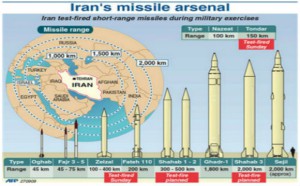
The Iranians will go on insisting on enriching uranium,
and on the Iranian streets people will continue chanting proudly:
« DEATH TO AMERICA »


 domhertz.com
Company Events
Hey there! I’m at work surfing around your blog from my new iphone 3gs! Just wanted to say I love reading your blog and look forward to all your posts! Keep up the superb work!
J’aimeJ’aime
modztreh
thank you very much my friend
J’aimeJ’aime
Designing a website
Sam was shaking, his eyebrows furrowed in anger. His hands clenched into fists over an over again. He shook his head.
J’aimeJ’aime
2015 cheap jordan 3 black cement
My partner and I stumbled over here coming from a different page and thought I may as well check things out. I like what I see so now i am following you. Look forward to finding out about your web page for a second time.
2015 cheap jordan 3 black cement http://www.hilarrieous.com/cheap-jordan-3-black-cement-o-24.html
J’aimeJ’aime
ルブタン 訳あり
Great blog! Is your theme custom made or did you download it from somewhere? A theme like yours with a few simple tweeks would really make my blog shine. Please let me know where you got your design. Thanks a lot
ルブタン 訳あり http://www.radiumsoft.com/fty.asp?broad-7903-1718.html
J’aimeJ’aime