


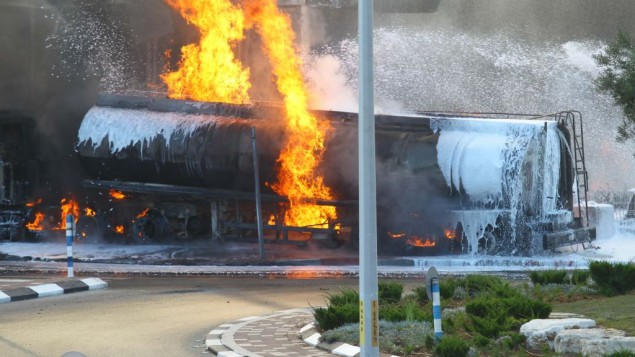

In order to restore quiet to the region and stop Hamas terrorism, the IDF has commenced Operation Protective Edge. The operation has one goal: to stop Hamas’ incessant rocket attacks against Israel’s civilians. Since the start of the operation, over 525 of those rockets hit Israel, and approximately 138 rockets were intercepted. The IDF has targeted over 1160 terror targets, with both naval and aerial capabilities.

New rocket barrage targets central, southern Israel.
Missiles cause no casualties in latest Gaza salvos; Arab League to meet as Israeli strikes, Palestinian deaths increase; Defense minister: ‘Many more days of combat’ ahead
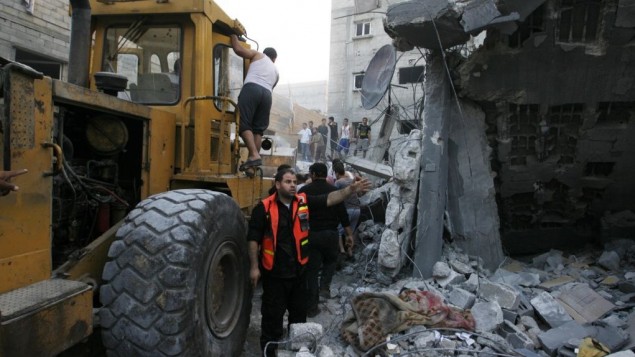
As Operation Protective Edge continues for a fifth day Saturday, over 500 rockets have been fired from Gaza at Israel, with several direct hits and several Israelis injured. Rockets fired throughout the day targeted communities near the Gaza Strip as well as Beersheba, Ashdod, Ashkelon, Rehovot and Rishon Lezion. The Israeli Air Force carried out around 60 air strikes in the Gaza Strip overnight Friday, and over 1,000 airstrikes since the operation began. Palestinian reports say at least 120 Palestinians have been killed. The latest reported civilian casualties came on Saturday morning, when Palestinians in Gaza said Israel targeted a charity for the disabled, killing two people. Prime Minister Netanyahu said Friday all Gaza casualties are the fault and responsibility of Hamas, which uses Gazans as human shields while Israel does its best to avoid hitting civilians. Netanyahu also said the operation would continue until longterm calm is guaranteed for Israel’s citizens. The Times of Israel is liveblogging events as they unfold.

Israel, Hamas resist truce as ground operation looms.
Foreign Minister Avigdor Liberman says political decision on troops entering Gaza expected within 48 hours.
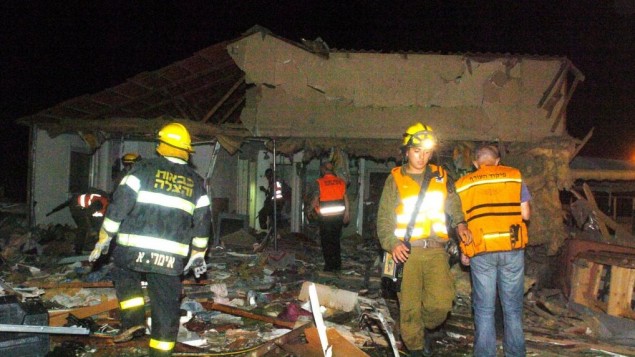
Israel has said it will resist international pressure to stop its aerial bombardment of Gaza, which has claimed more than 100 Palestinian lives, as Hamas kept up its rocket fire against the Jewish state.

Diplomatic efforts to end the hostilities have gathered pace, with US President Barack Obama phoning Israeli Prime Minister Benjamin Netanyahu and Washington offered to leverage its relationships in the Middle East to help end the hostilities.
Speaking at a news conference late Friday in Tel Aviv, Netanyahu said he would not end the military campaign until he achieved his goal of stopping the Hamas fire.
“No international pressure will prevent us from striking, with all force, against the terrorist organization which calls for our destruction,” he said. “No terrorist target in Gaza is immune.”
Sparking fears of an expanded conflict, at least one rocket fired from Lebanon hit open ground in northern Israel early Friday.
Despite international concerns, truce efforts have been unsuccessful, according to Cairo, which has been key in mediating previous Hamas-Israel ceasefires.
“Egypt has communicated with all sides to halt violence against civilians and called on them to continue with the truce agreement signed in November 2012,” the foreign ministry said.
“Unfortunately, these efforts… have met with stubbornness.”

After weeks of rocket fire on the south of the country, Israel appeared bent on dealing a fatal blow to the Islamist Hamas, who control Gaza.
Ismail Haniyeh, Gaza’s former premier and the most senior Hamas official in the coastal enclave, also ruled out any end to hostilities.
“(Israel) is the one that started this aggression and it must stop, because we are (simply) defending ourselves,” he said.
Ground attack decision soon
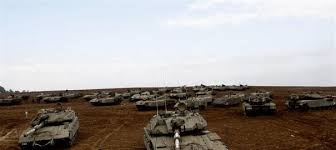
Israel says preparations are under way for a possible ground attack, with tanks and artillery massed along the border and some 33,000 reservists mobilized out of 40,000 approved by the cabinet.
Foreign Minister Avigdor Liberman said he expected a political decision on a possible ground operation within 48 hours.
“At the moment we are dealing with the first phase… air attacks,” he told Channel One television.
“I imagine we shall decide tomorrow (Saturday) or the day after on the next stage.”

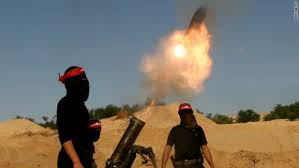
Hamas’s armed wing, the Ezzedine al-Qassam Brigades, kept up a steady stream of rocket fire on Israel throughout Friday.
Five rockets were shot down over Tel Aviv by the Iron Dome anti-missile system, the army said.
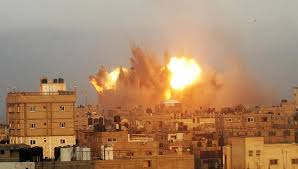
The Brigades said their men had targeted Israel’s main international airport near the city.
Ben Gurion Airport closed briefly but then resumed normal operations.
In Gaza, 13 Palestinians, including a woman and seven-year-old child, were killed in separate Israeli air strikes on Friday.
And in the early hours of Saturday 13 more Palestinians died as Israel’s Operation Protective Edge entered its fifth day, hiking the overall death toll to 118, medics said.
The Israeli military said in a statement that it had struck “several terrorists conspiring to launch rockets at Israel,” but did not elaborate.

Since the start of Israel’s operation on Tuesday, about 520 rockets have struck the Jewish state, and Iron Dome has shot down around 140, an army statement said late Friday.
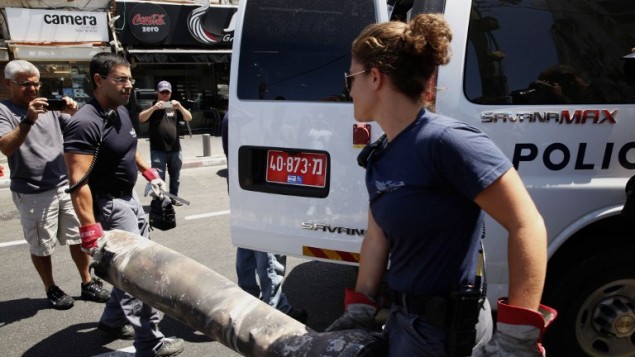
So far, no one in Israel has been killed. Two have been seriously wounded, including a man at a petrol station hit by a rocket.
In northern Israel, at least one rocket fired from Lebanon struck an open area near the town of Metula, prompting troops to hit back with artillery fire, the army said.
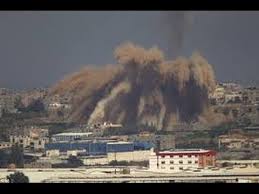
The military believed a Palestinian group had fired in solidarity with Hamas, public radio reported, as fears grew the violence in Gaza could spread to other fronts.
‘Military actions must stop’
The escalating violence brought more offers of truce negotiations from the White House Friday.
“There are a number of relationships the United States has that we are willing to leverage in the region to try to bring about an end to the rocket fire that’s originating in Gaza and, as we saw this morning, in Lebanon,” said White House spokesman Josh Earnest.
He referred to taking steps as the US and Egypt did in November 2012 to broker a truce between Israel and Hamas in order “to try to get this situation back on the path of de-escalation”.

Kuwait called for an urgent Arab foreign ministers meeting to discuss “the deteriorating situation” in the Gaza Strip, its Arab League representative said, which could take place on Monday.
The Israeli army has confirmed hitting 21 Hamas-owned structures in 24 hours, prompting a rebuke from the UN’s human rights office over the number of civilian casualties from strikes on homes.

“Even when a home is identified as being used for military purposes, any attack must be proportionate… and precautions must be taken to protect civilians,” said spokeswoman Ravina Shamdasani.

A group of 34 charities and NGOs also called for an end to the fighting.

“Military actions by all parties must stop,” said a statement signed by groups including ActionAid, CARE, Oxfam and Save the Children.Amnesty International called for the United Nations “to immediately impose a comprehensive arms embargo on Israel, Hamas and Palestinian armed groups” and launch an inquiry into “violations committed on all side.”

Hamas, Hezbollah coordinating on the ground, says Hamas official
Hamas and Lebanese terror group Hezbollah are coordinating and “exchanging expertise” on Israel, a Hamas official in Lebanon says.
“The enemy is the same and our tactics are the same. Therefore, we put in efforts to exchange expertise. There is constant field cooperation and coordination,” the Lebanese Daily Star quotes Osama Hamdan as saying.
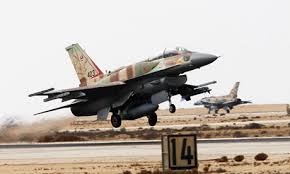
“The relationship with Hezbollah and Iran today is better than everyone thinks, and ties with Hezbollah [specifically] is by far better than what [enemy] optimists want to believe,” Hamadan,says. “These ties are based on confronting the Zionist and working on liberating Palestine. Everyone is keen on preserving such a relationship regardless of how much the circumstances change and opinions differ.”
Hamdan says Hamas is able to withstand Israeli attacks and is capable “of continuing to fire rockets and confront any ground operation and reach deep into Israel.”
“The resistance has grown from a military faction to include more people, and now today involves the general population. Therefore, it is difficult to defeat it, but the battle will take some time and there are plenty of surprises to come,” he says.
The relationship between Hamas and Hezbollah deteriorated over the Syrian crisis as the Sunni Hamas criticized the regime of Bashar Assad over its brutal crackdown and the Shi’ite Hezbollah continues to alongside the Syrian army.


 domhertz.com